
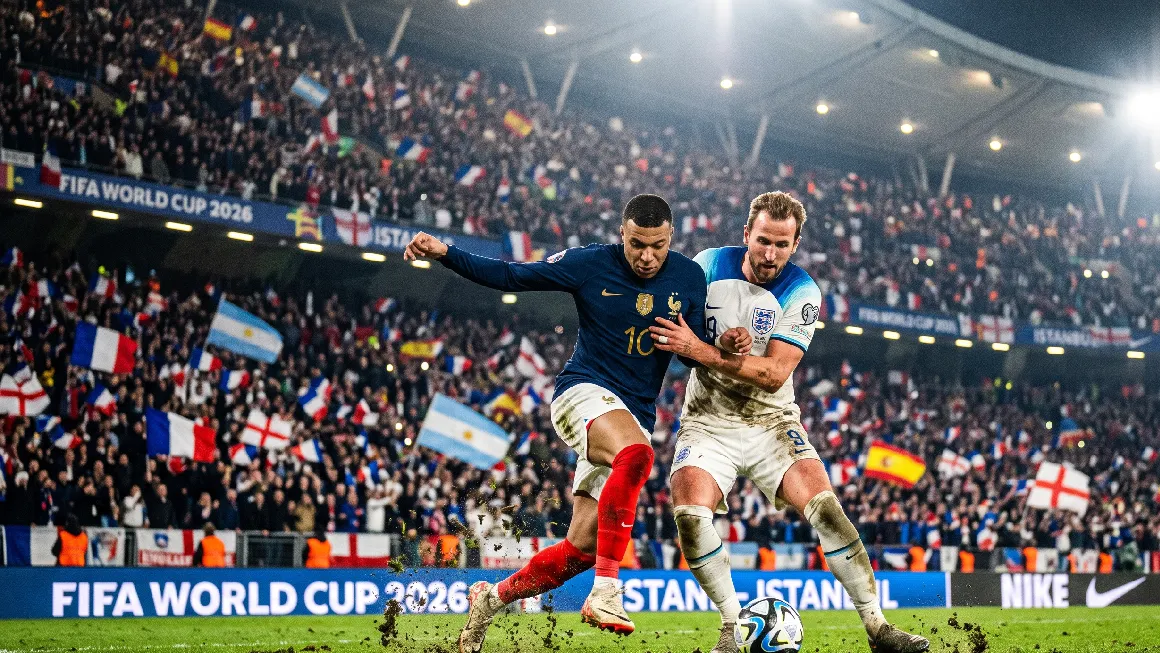
The 2026 World Cup quarter-finals brought huge shocks as giants like Brazil and Germany went home early. France and Spain quickly reached the semi-finals while Argentina remains the only South American team. Regular B1 English listening and Shadowing of this audio will improve your English pronunciation and connected speech.
The 2026 World Cup, held across the United States, Canada, and Mexico, has reached its most exciting moment. The quarter-finals are here, and the road to this point has been full of shocks. Some of football’s biggest names went home much earlier than anyone expected.
The first great surprise was Brazil. Many fans believed the Brazilians would lift the trophy, but Norway beat them 2-1 in the last sixteen. Brazil could not break through the strong Norwegian defence, and quick counter-attacks ended their dream. Germany also left early. The German team could not pass the wall that Morocco built in front of goal, and a 1-0 result sent them home for a third World Cup in a row. Italy, the European champions, lost 1-0 to Switzerland with a goal in extra time. Their old problem, finding the net, hurt them once again.
Two teams have already booked their place in the semi-finals, and both walked a difficult path to get there. France looked calm and confident throughout. In the last sixteen, they won an early final against Portugal, 2-1. Then, in the quarter-final on the 9th of July, they ended Morocco’s fairy tale with a clear 2-0 win. France play like a real tournament team. They seem happy to give the ball away, but they punish opponents at incredible speed. Their experience gives them a huge advantage.
Spain also reached the last four with an impressive display. They knocked the host nation, the United States, out of the cup with an easy 3-0 result. On the 10th of July, they beat Belgium 2-1 in a tight game. Spain no longer play the old slow passing style. Today they move the ball forward quickly and aim straight for goal. Their energy in midfield gives their rivals no time to breathe.
The other two quarter-finals will decide tonight who joins them. First, Norway face England at midnight. England beat Uruguay 2-0 in the last sixteen and look in excellent form. Norway, of course, arrive after their historic victory over Brazil. England have a hard defence and dangerous wing play, but Norway, led by their brave and skilful stars, could give the English a serious test. Many people now call Norway the most dangerous team left in the competition.
In the second match, Argentina face Switzerland in the early hours. Argentina beat Mexico 3-1 and looked powerful. Switzerland, however, have become giant-killers. They defend as a team, and every player works hard. If Argentina cannot score early, Switzerland may take the game to penalties.
Across the tournament, European teams clearly rule the stage. Argentina remain the only South American side still standing. The winners of tonight’s games will meet on the 15th of July, while France play Spain in the first semi-final on the 14th. The great final waits on the 19th of July in New Jersey. For every proud nation still fighting, the biggest prize in world football is now just three matches away. They still hope to win it all.
Vocabulary · Key Words from the Article
| # | Word | Definition | Example Sentence |
|---|---|---|---|
| 1 | path noun | the way or series of steps that someone takes to reach a goal | “Hard work is the only path to success in sport.” |
| 2 | confident adjective | feeling sure that you can do something well or that something good will happen | “She felt confident before the big exam because she had studied hard.” |
| 3 | fairy tale noun | a story with a magical, perfect, or very happy ending; often used for a surprising success | “The small team's run to the final was a real fairy tale.” |
| 4 | impressive adjective | so good that people admire it | “The young player gave an impressive performance in his first match.” |
| 5 | historic adjective | important in history because it is special or will be remembered | “The team celebrated a historic win against the champions.” |
| 6 | win verb | to be the best or first in a game, race, or competition | “If they play well, they could win the tournament this year.” |
Tip: Click any vocabulary row to find the word in the article. Export this list to your favorite flashcard apps like Quizlet or Anki. | |||
Usage Notes & Synonyms
Often used figuratively: 'the path to victory', 'a difficult path'. It can also mean a small track to walk on.
Synonym: route, way
Use 'confident about' or 'confident of'. Do not confuse it with the noun 'confidence'.
Synonym: sure, positive
In sport it describes a surprising, almost magical success. Also written 'fairytale' as an adjective.
Synonym: dream story
Common collocations: 'an impressive display', 'impressive results'. The verb is 'impress' and the noun is 'impression'.
Synonym: remarkable, excellent
Do not confuse 'historic' (very important) with 'historical' (connected to the past).
Synonym: memorable, important
Irregular verb: win, won, won. You win a game or a prize, but you beat a person or team.
Synonym: beat, triumph
Grammar in Context
Grammar in Context
This report uses the past simple again and again to describe matches that are already finished. We form it with the second form of the verb. Regular verbs add -ed (looked, reached, knocked), while many common football verbs are irregular (beat, won, lost, went, built). We use the past simple because each match happened at a clear, completed time in the past, for example 'Norway beat them 2-1' or 'they won an early final'. The tense tells the reader that the result is fixed and cannot change now.
Listening Comprehension Questions
Listening Comprehension Questions
Why does the writer describe Brazil's exit as 'the first great surprise'?
The text says 'Many fans believed the Brazilians would lift the trophy, but Norway beat them 2-1'. The word 'but' shows the result went against what people expected, which is why it was a surprise.
What does the report suggest about how France play their matches?
The text states 'They seem happy to give the ball away, but they punish opponents at incredible speed.' This shows France let the other team have the ball and then attack quickly.
In the sentence 'Norway, of course, arrive after their historic victory over Brazil', the word 'historic' suggests the win was:
'Historic' means important enough to be remembered. Beating the favourites, Brazil, was a rare and special result, so the writer uses 'historic' to show its importance.
What is the main idea of the final paragraph?
The last paragraph says 'European teams clearly rule the stage' and 'the biggest prize in world football is now just three matches away.' Together these lines show European strength and how near the final is.
Switzerland are called 'giant-killers'. Using details from the text, explain what this nickname means and why it fits them.
Sample Answer
A 'giant-killer' is a smaller or less famous team that beats stronger, more famous teams. The name fits Switzerland because they knocked out Italy, the European champions, in extra time, and they may also trouble Argentina. The text explains that they succeed because 'they defend as a team, and every player works hard', so their teamwork lets them beat bigger names.
Teacher's Note
A good answer must define 'giant-killer' as a weaker side that beats a stronger one, give at least one example from the text (beating Italy), and connect their success to the reason given in the text (strong team defence and hard work).
The writer says European teams 'clearly rule the stage'. What does this tell us about the balance of power at this World Cup, and why might this matter for the sport?
Sample Answer
It tells us that Europe is much stronger than other regions at this tournament, because only Argentina from South America is still playing, while France, Spain, Norway, England, and Switzerland are all European. This matters because football is a global sport, and when one region controls the later stages, other continents may feel they need to improve and invest more to compete in future competitions.
Teacher's Note
A strong answer should note the European dominance shown by the list of remaining teams, contrast it with Argentina as the only South American side, and offer a thoughtful real-world point about global balance or future competition.
Speaking Practice & Discussion Questions
Speaking Practice & Discussion Questions
Discussion Questions
-
1
Which two teams have already reached the semi-finals in the article?
-
2
Do you follow football or another sport? Which team do you support, and why?
-
3
Imagine your favourite team reached a World Cup semi-final. How would you celebrate?
-
4
Some people love it when a small team beats a giant. Do you enjoy these surprises, or do you prefer the strong favourites to win?
-
5
The article says European teams are much stronger at this World Cup. Do you think this is good or bad for football around the world?
Further Discussion
-
1
Why do you think people all over the world become so emotional about football and other sports?
-
2
Is it fair that rich countries and clubs can buy the best players, or should there be stronger rules to keep sport equal?
-
3
How do you think technology, like video referees or player data, will change football in the next twenty years?
Download the Worksheet for Offline Practice
Download the official B1 Intermediate English worksheet (PDF). Review key vocabulary such as ‘path’ and ‘historic’, answer selected comprehension questions, and check your answers with the included answer key.
Leave a Reply