
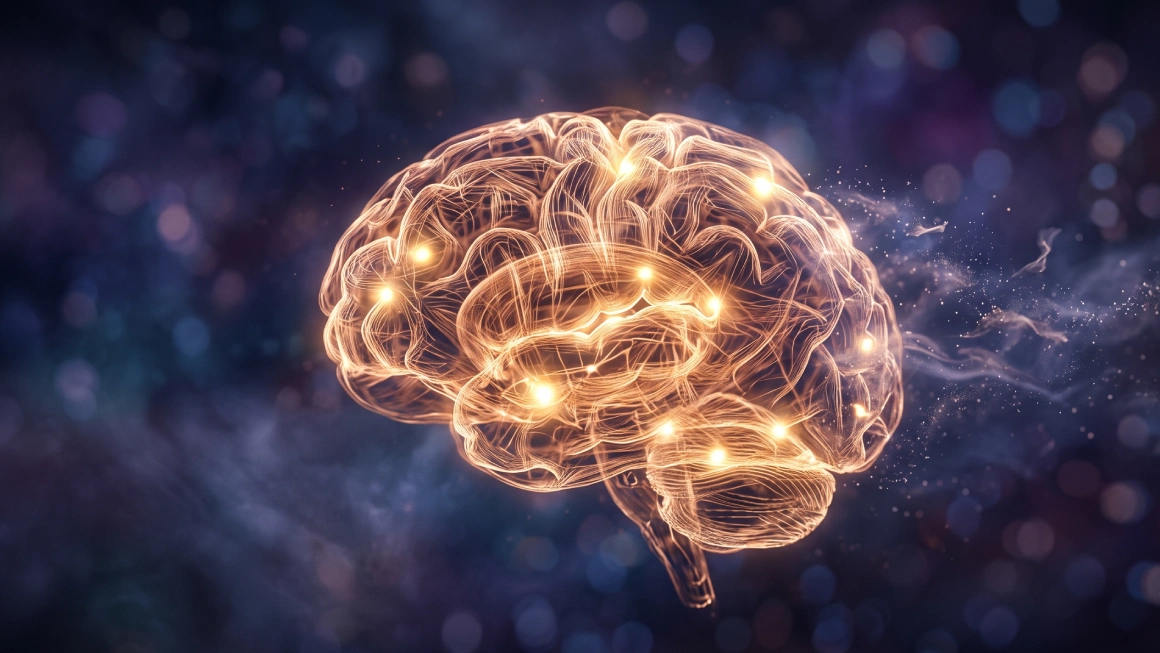
Our brains naturally forget many small details, but proper sleep and regular reviews help store important information safely. You can use this clear audio for English listening and Shadowing practice. This active routine will quickly improve your intermediate English pronunciation and connected speech.
Think about yesterday morning. Can you remember exactly what you ate for breakfast? Now think about a birthday party from ten years ago. You probably lost most of the small details, but you might still remember how you felt. This difference tells us something important about how human memory really works.
Scientists who study the brain have learned that we do not save memories like files on a computer. Instead, the brain keeps only what it thinks we need. Every day, our eyes and ears take in a huge amount of information. If the brain tried to store all of it, we would feel completely tired and confused. So forgetting is not a mistake. It is a normal and useful part of a healthy mind.
When something new happens, the brain first creates a weak, short memory. This first impression is fragile, and it can easily disappear within minutes. If the information seems useful, or if it is connected to a strong emotion, the brain works to keep it. This is why we easily remember frightening or exciting moments, while an ordinary Tuesday afternoon slowly turns into an empty gap in our week.
Why Memories Grow Weaker
Time is the biggest enemy of memory. A famous experiment in the nineteenth century showed that people forget new facts very quickly during the first hour, and then more slowly after that. Without any effort, most of what you learn today will be gone by next week.
Sleep also plays a surprising role. While you rest at night, the brain quietly repeats the important events of the day and moves them into long-term storage. People who do not sleep well often struggle to remember new names, words, or numbers the following morning.
Modern life makes the problem worse. We check our phones hundreds of times a day, and each interruption pulls our attention away. When we never fully concentrate on one thing, the brain cannot build a clear memory of it. This is one reason why we walk into a room and immediately forget why we came.
How to Remember More
The good news is that we can train the brain to hold information better. The most effective method is simple: instead of reading something many times in one evening, review it a little every few days. Each time you try to memorize the facts again, the memory grows stronger and lasts longer.
Teachers often encourage students to test themselves rather than just read their notes. Trying hard to determine an answer, even when it feels difficult, builds a much deeper memory than reading the same page over and over.
Sleep, exercise, and calm attention all help too. None of these tricks will give you a perfect memory, and you will still forget many small things. But you can imagine your mind as a busy garden. If you care for the important plants and water them regularly, they will grow. And eventually, the memories that truly matter to you will stay, while the rest quietly fade away.
Vocabulary · Key Words from the Article
| # | Word | Definition | Example Sentence |
|---|---|---|---|
| 1 | impression noun | an idea, feeling, or memory that something leaves in your mind, especially the first one. | “She made a good impression on her new boss during the first meeting.” |
| 2 | gap noun | an empty space or a missing part where something should be. | “There is a big gap in my knowledge of history.” |
| 3 | effective adjective | working well and producing the result that you want. | “Drinking water is a simple but effective way to feel more awake.” |
| 4 | memorize verb | to learn something carefully so that you can remember it exactly. | “Actors have to memorize all of their lines before the show.” |
| 5 | determine verb | to find out or decide something exactly, often after thinking or checking. | “The doctor ran tests to determine the cause of the pain.” |
| 6 | eventually adverb | in the end, after a long time or after many things happen. | “The bus was late, but it eventually arrived.” |
Tip: Click any vocabulary row to find the word in the article. Export this list to your favorite flashcard apps like Quizlet or Anki. | |||
Usage Notes & Synonyms
Very common with the verb 'make': 'make a good/bad first impression'. Do not confuse it with 'expression' (something you say).
Synonym: feeling, idea
Often used as 'a gap in' (a gap in your memory / knowledge / the market). Also common: 'gap year'.
Synonym: space, hole
Be careful: 'effective' means it works well, while 'efficient' means it works without wasting time or energy. The adverb is 'effectively'.
Synonym: successful, useful
British spelling is often 'memorise'. Use it for exact learning (a poem, a number), not for general remembering of feelings.
Synonym: learn, remember
In this article it means 'work out an answer'. It is more formal than 'find out' and is common in science and study contexts.
Synonym: find out, decide
It talks about the final result after some delay. Do not confuse it with 'finally' when listing points. It is a 'false friend' in some languages, where a similar word means 'maybe'.
Synonym: finally, in the end
Grammar in Context
Grammar in Context
This article uses conditional sentences to explain cause and effect in the brain. The zero conditional (if + present simple, present simple) describes things that are always true: 'If the information seems useful, the brain works to keep it.' The first conditional (if + present simple, will + verb) describes a likely future result: 'If you care for the important plants, they will grow.' At B1 level, these structures are very useful because they let you talk about rules, facts, and probable outcomes. Notice that the 'if' part can come first or second in the sentence, and we use a comma only when the 'if' part comes first.
Listening Comprehension Questions
Listening Comprehension Questions
According to the article, why does the brain forget so much information?
The text states that if the brain 'tried to store all of it, we would feel completely tired and confused,' and then calls forgetting 'a normal and useful part of a healthy mind.' This shows forgetting is a helpful filter, not a fault.
What does the article say helps decide whether a new memory stays or disappears?
The third paragraph explains that if information 'seems useful, or if it is connected to a strong emotion, the brain works to keep it,' which is why frightening or exciting moments are easy to recall.
In the sentence 'an ordinary Tuesday afternoon slowly turns into an empty gap in our week,' the word 'gap' suggests that the afternoon has:
A 'gap' is an empty space or missing part. The writer uses it to show that a boring, ordinary afternoon leaves no memory behind, so there is a blank space in our memory of the week.
What is the main message of the final section, 'How to Remember More'?
The section recommends reviewing 'a little every few days' and testing yourself instead of 'reading something many times in one evening,' because trying hard to recall builds 'a much deeper memory.'
The writer compares the mind to a busy garden. In your own words, explain what this comparison means and whether you find it helpful.
Sample Answer
The comparison means that memories are like plants: they need care and regular attention to survive. Just as a gardener waters and looks after the most important plants so they grow, we must review and use important information so those memories become stronger. The less important plants, like small daily details, are not cared for, so they fade away, just as weeds or wild plants are left alone. I find it helpful because it turns an invisible process inside the brain into something familiar and easy to picture, and it also gives a hopeful message: we have some control over what we keep.
Teacher's Note
A strong answer should (1) explain both sides of the metaphor: plants = memories and gardening = effort/review; (2) connect 'caring for plants' to the article's advice about reviewing and testing; (3) explain why the important memories stay while others fade; and (4) give a clear personal opinion with a reason. Look for the student using their own words rather than copying the text.
The article says modern phones make forgetting worse. Do you think technology harms our memory, or can it also help us remember? Give reasons and examples.
Sample Answer
I think technology has two sides. It can harm memory because constant messages and notifications pull our attention away, so the brain cannot build a clear memory, exactly as the article describes when it says we 'walk into a room and immediately forget why we came.' However, technology can also help. Phones store phone numbers, dates, and photos for us, and apps can remind us to review information every few days, which is the exact method the article recommends. So the real problem is not technology itself but how we use it. If we allow constant interruptions, it harms memory, but if we use it as a careful tool, it can support the brain.
Teacher's Note
A good answer should (1) refer to the article's point about interruptions and attention; (2) present a balanced view with at least one harm and one benefit; (3) support each side with a concrete example; and (4) reach a clear conclusion. Reward critical thinking that goes beyond simply repeating the article.
Speaking Practice & Discussion Questions
Speaking Practice & Discussion Questions
Discussion Questions
-
1
According to the article, what happens to a memory in the very first hour after you learn something new?
-
2
What is one thing from your own childhood that you still remember clearly, and why do you think it stayed in your memory?
-
3
If you could choose to remember every single day of your life perfectly, would you want to? Why or why not?
-
4
Do you think students today find it harder to concentrate than students in the past? What might be the reasons?
-
5
Some people say that writing everything on our phones is making our memories weaker. Do you agree, and how might this change society in the future?
Further Discussion
-
1
If forgetting is a natural and useful part of the mind, is it always a bad thing to forget? When might forgetting actually be good for a person?
-
2
Imagine a new medicine existed that could stop you from ever forgetting anything. Would it be right to give this medicine to everyone, and what problems could it create?
-
3
How might our schools, jobs, and daily habits change in the future if machines and computers do most of our remembering for us?
Download the Worksheet for Offline Practice
Download the official B1 Intermediate English worksheet (PDF). Review key vocabulary such as ‘impression’ and ‘effective’, answer selected comprehension questions, and check your answers with the included answer key.
Leave a Reply