
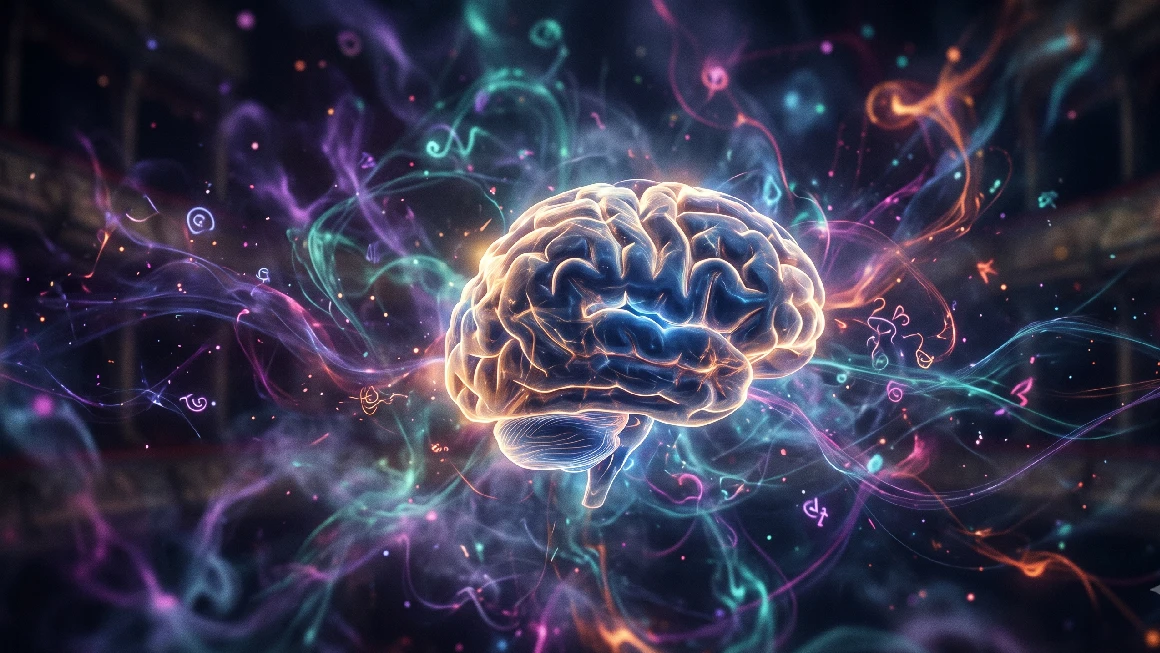
Scientists believe dreaming helps the brain organize daily memories, process complex emotions, and even prepare us for dangerous situations. While discovering these fascinating theories, you can effectively enhance your intermediate English listening. Combine this audio with Shadowing to master connected speech and develop excellent English pronunciation.
You wake up with a fading picture in your mind. You were flying over your old school, or arguing with someone you have not seen in years. Within seconds, the details slip away. For thousands of years, people have wondered why the human brain produces these strange nightly performances. Today, researchers can measure sleeping brains in detail, yet they still cannot fully agree on the answer.
Most dreaming happens during a stage called REM sleep, when the eyes move quickly behind closed lids and brain activity looks almost as busy as when we are awake. During this stage, the brain seems to process the experiences of the day. Sleep scientists have found that people who learn a new skill often perform better after a night of sleep, as if the brain has quietly practiced while the body rested.
Sorting the Day
One popular idea is that dreams help us organize memories. The brain appears to sort through what happened, keeping useful information and letting go of the rest. Emotional experiences receive special attention. Some researchers argue that dreaming helps regulate our feelings, softening painful memories so that they hurt less over time. This may explain why a stressful day can produce especially vivid dreams, full of bright colors and intense scenes.
This emotional role could also connect dreaming to mental health. People who suffer from high levels of anxiety often report more frequent nightmares. Some therapists now help patients rewrite frightening dreams while awake, teaching the brain a calmer ending to repeat at night.
Ancient Warnings, Modern Science
Long before laboratories existed, thinkers offered their own explanations. In the early twentieth century, Sigmund Freud claimed that dreams revealed hidden wishes buried in the unconscious mind. He believed that a secret conflict between what we want and what society allows appeared in disguised form while we slept. Modern psychological research treats many of his specific claims with caution, but his central idea, that dreams reflect our inner emotional lives, has proved surprisingly difficult to dismiss.
Another theory suggests something less poetic. According to this view, dreams may simply be the brain making sense of random signals that fire during sleep. The mind, always eager to find meaning, weaves these signals into a rough story. If this is true, the strange plots of our dreams are less like secret messages and more like a puzzle the brain solves automatically.
There may be a defensive purpose too. One researcher has proposed that dreams act as a kind of practice, letting us rehearse dangerous situations safely. Running from a threat in a dream might prepare us to react faster in real life.
Perhaps every theory holds part of the truth. What seems clear is that dreaming is no accident. Each night, without any effort from us, the brain builds a private theater and stages a show that no one else will ever see.
Vocabulary · Key Words from the Article
| # | Word | Definition | Example Sentence |
|---|---|---|---|
| 1 | process verb | to deal with information or experiences in your mind in order to understand or organize them | “It took her a few days to process the news that she had won the competition.” |
| 2 | regulate verb | to control something so that it works correctly or stays at the right level | “The body uses sweat to regulate its temperature on a hot day.” |
| 3 | vivid adjective | producing very clear, strong, and detailed images in the mind | “I still have a vivid memory of my first day at school.” |
| 4 | anxiety noun | a feeling of worry or fear, especially about something that might happen | “Many students feel a lot of anxiety before an important exam.” |
| 5 | conflict noun | a serious disagreement or a clash between different needs, wishes, or ideas | “There is often a conflict between what we want to do and what we should do.” |
| 6 | psychological adjective | relating to the mind and the way people think and feel, rather than the body | “Losing his job had a serious psychological effect on him.” |
Tip: Click any vocabulary row to find the word in the article. Export this list to your favorite flashcard apps like Quizlet or Anki. | |||
Usage Notes & Synonyms
As a verb, 'process' is often used with information, data, emotions, or experiences. Note the pronunciation stress can differ from the noun 'a process'.
Synonym: handle, work through
Common collocations: regulate emotions, regulate temperature, regulate the market. It suggests keeping something balanced rather than stopping it completely.
Synonym: control, manage
Often used with 'memory', 'dream', 'imagination', and 'description'. A 'vivid' image feels almost real, not vague or faint.
Synonym: clear, bright
Usually uncountable. Common phrases: suffer from anxiety, feel anxiety, cause anxiety. The related adjective is 'anxious'.
Synonym: worry, unease
Can describe both large events (armed conflict) and inner feelings (a conflict of interest, an inner conflict). Note the stress falls on the first syllable in the noun.
Synonym: clash, disagreement
Common collocations: psychological effect, psychological support, psychological research. The 'p' at the start is silent.
Synonym: mental, emotional
Grammar in Context
Grammar in Context
Because science has not reached a firm answer about dreams, the article relies heavily on modal verbs that express possibility rather than certainty. Phrases like 'dreams may simply be', 'this might prepare us', 'could also connect', and 'the brain seems to process' allow the writer to present ideas as theories, not proven facts. At B2 level, learning to separate what is certain ('the eyes move quickly') from what is uncertain ('dreaming may help us') is essential for reading and writing about science, opinions, and predictions. These modals soften each claim and signal to the reader that the point is a reasonable guess supported by evidence, not a final conclusion.
Listening Comprehension Questions
Listening Comprehension Questions
What is the main reason the article gives for why scientists still cannot fully explain dreams?
The first paragraph states that 'researchers can measure sleeping brains in detail, yet they still cannot fully agree on the answer.' The word 'yet' shows a contrast between what science can now do and what it still cannot settle, which is exactly what this option describes.
According to the article, how might dreaming be connected to emotional well-being?
In the section 'Sorting the Day', the text says dreaming may help 'regulate our feelings, softening painful memories so that they hurt less over time.' The other options either exaggerate ('removes all memories', 'prevents ever') or contradict the text, which links stress to more vivid dreams and nightmares.
In the sentence 'the strange plots of our dreams are less like secret messages and more like a puzzle the brain solves automatically', what does the writer suggest about this theory?
This theory is introduced as 'something less poetic' and says dreams 'may simply be the brain making sense of random signals'. The 'puzzle' comparison shows the brain building meaning out of chance activity, not receiving 'secret messages', so the poetic and warning options are the opposite of the point being made.
Which sentence best describes the overall position the writer takes at the end of the article?
The final paragraph states 'Perhaps every theory holds part of the truth' and 'dreaming is no accident.' This directly rejects the idea of a single explanation and the idea that dreams are an accident, while presenting a balanced conclusion that matches this option.
The article presents several different theories about why we dream. In your own words, explain which theory you find most convincing and why.
Sample Answer
A strong answer would name one specific theory from the text, such as the memory-organization theory, the emotional-regulation theory, the random-signal theory, or the threat-rehearsal theory, and then explain the reasoning behind the choice. For example: 'I find the emotional-regulation theory most convincing because the article connects it to real evidence, such as people with high anxiety having more nightmares and therapists helping patients rewrite frightening dreams. This links dreaming to something practical and measurable, rather than to hidden wishes that cannot be tested.' The response should compare the chosen theory against at least one other and give a clear reason for preferring it.
Teacher's Note
To grade well, the answer must (1) clearly identify one theory actually mentioned in the article, (2) use the learner's own words rather than copying full sentences, (3) give at least one concrete reason or piece of textual evidence supporting the choice, and (4) show some comparison or awareness that other theories exist. Depth is shown by connecting the theory to evidence in the text, not just stating a preference.
The article compares the dreaming brain to a 'private theater' that stages a show no one else can see. Why do you think the writer chose this image, and what does it suggest about the nature of dreams?
Sample Answer
A high-level answer would explain that the 'private theater' image suggests dreams are creative, dramatic, and completely personal. For example: 'The writer uses the theater image to show that dreaming is an active performance created by the brain, not a random accident. The word private highlights that dreams are experienced alone and cannot be shared or fully described to others. This suggests that dreams are both meaningful, because a theater stages a planned show, and mysterious, because the audience of one can never prove what they saw.' The response should interpret the metaphor rather than simply repeat it.
Teacher's Note
A good answer must (1) explain the effect of the metaphor rather than just quoting it, (2) connect at least two ideas from the image, such as 'private' meaning personal and 'theater' or 'show' meaning something crafted and dramatic, and (3) link this back to the article's overall message that dreaming has purpose and meaning. Analytical depth is shown by discussing why the writer chose this comparison over a plainer description.
Speaking Practice & Discussion Questions
Speaking Practice & Discussion Questions
Discussion Questions
-
1
According to the article, during which stage of sleep does most dreaming happen?
-
2
Do you usually remember your dreams in the morning, or do they fade quickly like the one described at the start of the article?
-
3
If you could control and design your own dreams every night, what kind of dream would you choose to have?
-
4
The article mentions that stressful days can cause more vivid dreams. Do you think our daily lives really shape what we dream about?
-
5
Some people believe dreams carry important messages, while others think they are just random brain activity. Which view do you agree with more, and why?
Further Discussion
-
1
If scientists one day fully understood the purpose of dreams, do you think that knowledge would change how much people value or trust their own dreams?
-
2
Some researchers are developing technology that might one day record or influence dreams. Would it be ethical to enter or change another person's dreams, even to help them, and where should the limits be?
-
3
As people spend more time with screens and artificial intelligence, how do you think human dreaming and imagination might change in the coming decades?
Download the Worksheet for Offline Practice
Download the official B2 Upper-Intermediate English worksheet (PDF). Review key vocabulary such as ‘vivid’ and ‘anxiety’, answer selected comprehension questions, and check your answers with the included answer key.
Leave a Reply