How To Study?
How to Learn English with Listening and Shadowing?
Discover how English shadowing practice can improve your listening comprehension, pronunciation, fluency, and speaking confidence through natural repetition and real-world audio lessons.
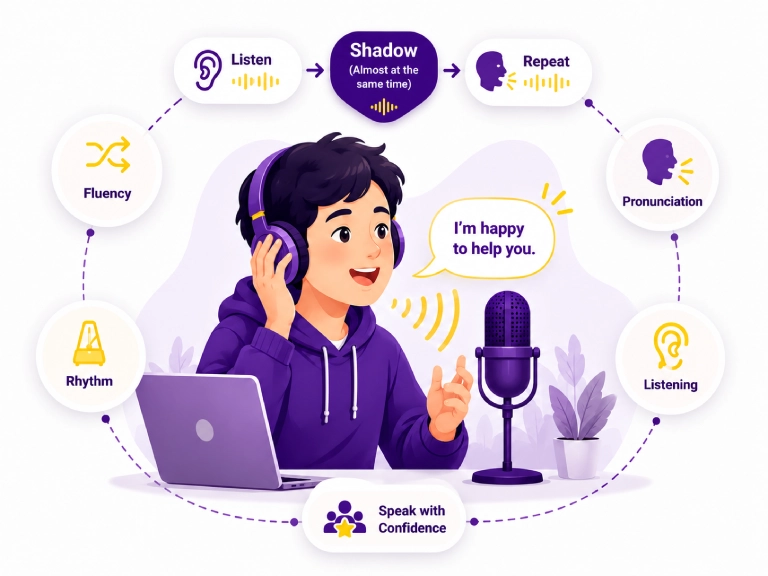
What Is English Shadowing Practice?
English shadowing practice is a language learning technique where learners listen to spoken English and repeat it aloud almost simultaneously.
Instead of translating or memorizing grammar rules, shadowing trains your brain to process English naturally through repetition, rhythm, pronunciation, and listening exposure.
This method is widely used for:
- Improving fluency
- Developing natural pronunciation
- Increasing listening comprehension
- Learning sentence rhythm and intonation
- Building speaking confidence
Why Listening Is Essential for English Fluency
Many English learners spend years studying grammar but still struggle to understand natural spoken English.
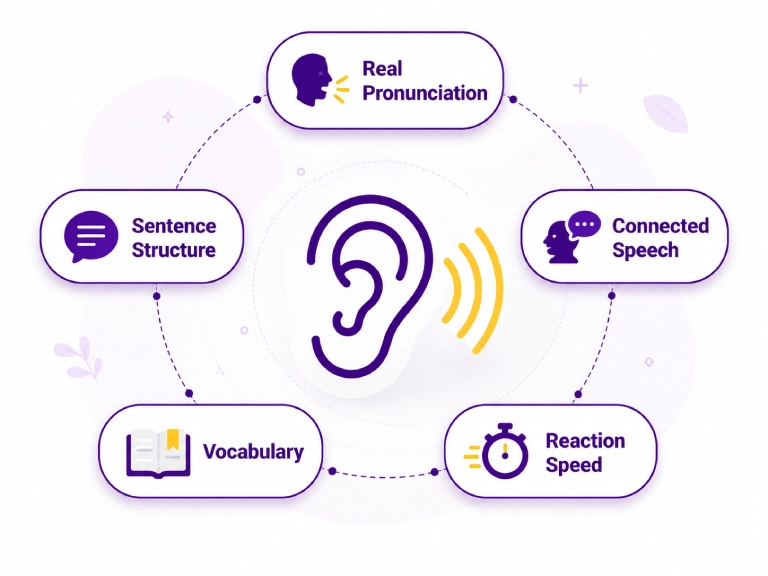
Listening practice helps learners:
- Recognize real pronunciation patterns
- Understand connected speech
- İmprove reaction speed
- Learn vocabulary in context
- Absorb natural sentence structure
The more understandable English input you hear, the easier speaking becomes.
Listen Without Reading
Try to understand the main idea naturally.
Read the Transcript
Review unknown vocabulary and sentence structure.
Shadow the Audio
Repeat the speaker’s pronunciation and rhythm aloud.
Review Vocabulary
Study key words and example sentences.
Practice Again
Re-listen to improve fluency and comprehension.
Use the PDF Worksheet
Complete comprehension and vocabulary exercises offline.
How Often Should You Practice?
Consistency is more important than long study sessions.
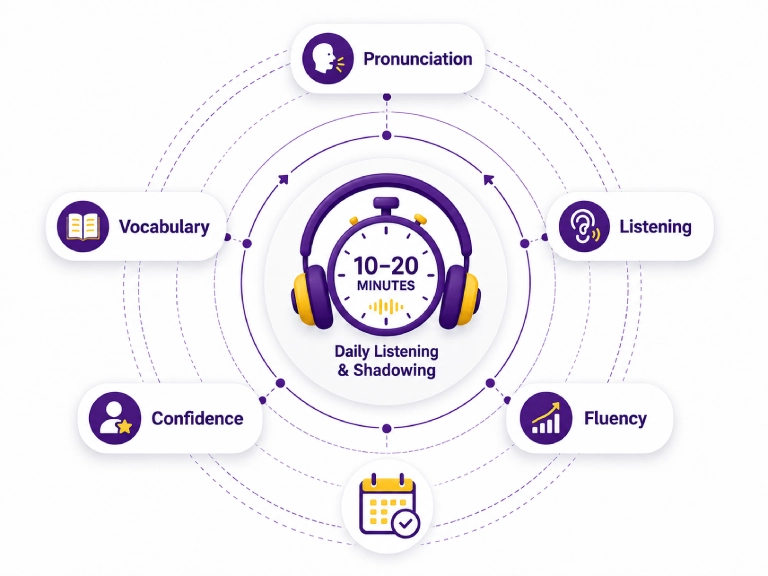
Even 10–20 minutes of daily English shadowing practice can significantly improve:
- Pronunciation
- Listening comprehension
- Fluency
- Vocabulary retention
- Speaking confidence
For best results, repeat the same audio several times and focus on rhythm, pronunciation, and natural sentence flow. English shadowing practice works best when it is short, consistent, and active rather than passive.
Who Benefits from Shadowing?
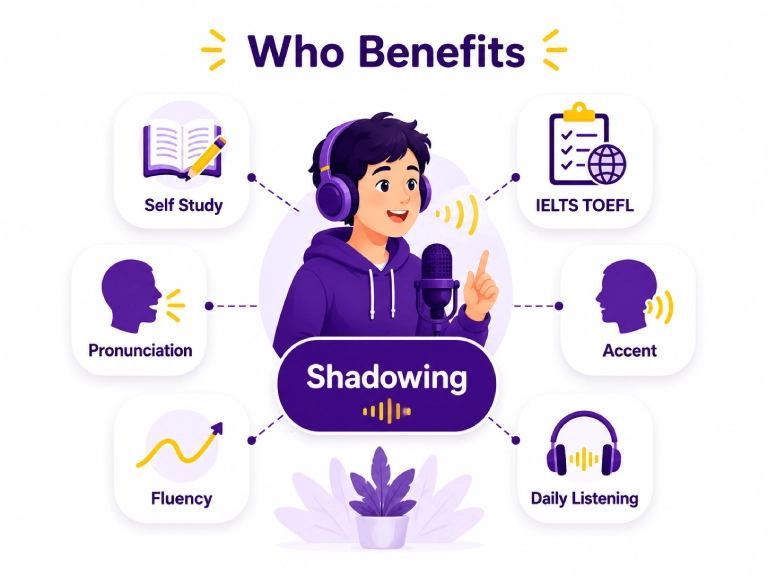
English shadowing practice is especially useful for learners who want to improve pronunciation, listening comprehension, and speaking fluency through active repetition.
It can help:
- Self-study English learners
- IELTS and TOEFL students
- Pronunciation practice
- Accent improvement
- Speaking fluency development
- Daily English listening routines
Frequently Asked Questions
English shadowing practice is a language learning technique where you listen to spoken English and repeat it aloud almost immediately. It helps improve listening comprehension, pronunciation, rhythm, fluency, and speaking confidence.
Yes. Shadowing improves pronunciation, listening comprehension, rhythm, and speaking confidence through active repetition and exposure to natural English speech.
Yes. Beginners can start English shadowing practice with slow, simple audio designed for A1–A2 learners before moving to longer and more natural English materials.
Most learners benefit from 10–20 minutes of English shadowing practice each day. Short, consistent practice with repeated audio is more effective than long passive study sessions.
Yes. Repeating native speech patterns helps learners develop more natural pronunciation, intonation, stress patterns, and connected speech.
Listenglish provides English listening lessons and shadowing exercises for all CEFR levels, from A1 Beginner to C2 Proficiency.
Yes. All lessons are designed for independent learners and include audio practice, vocabulary support, comprehension activities, and downloadable PDF worksheets.
The most effective approach combines regular listening practice, shadowing exercises, vocabulary review, and exposure to authentic English audio from different topics and difficulty levels.
No. Focus on understanding the overall meaning first. Listening comprehension improves gradually through repeated exposure to natural English.
Lessons cover a wide range of topics including history, culture, science, technology, health, psychology, business English, and everyday life.
Yes. Many lessons include downloadable PDF worksheets that help learners review vocabulary, practice comprehension, and reinforce key concepts.
Yes. Listening practice and shadowing exercises can help learners prepare for exams such as IELTS, TOEFL, PTE Academic, and Cambridge English qualifications.
Listening alone helps, but combining listening with shadowing and active repetition is much more effective for developing speaking fluency.
Choose a level where you can understand roughly 70–80% of the content. If a lesson feels too difficult, move down one CEFR level and gradually progress.
Listenglish focuses on listening-based language acquisition through authentic audio, structured shadowing practice, contextual vocabulary learning, and CEFR-aligned lessons designed for real-world communication.