
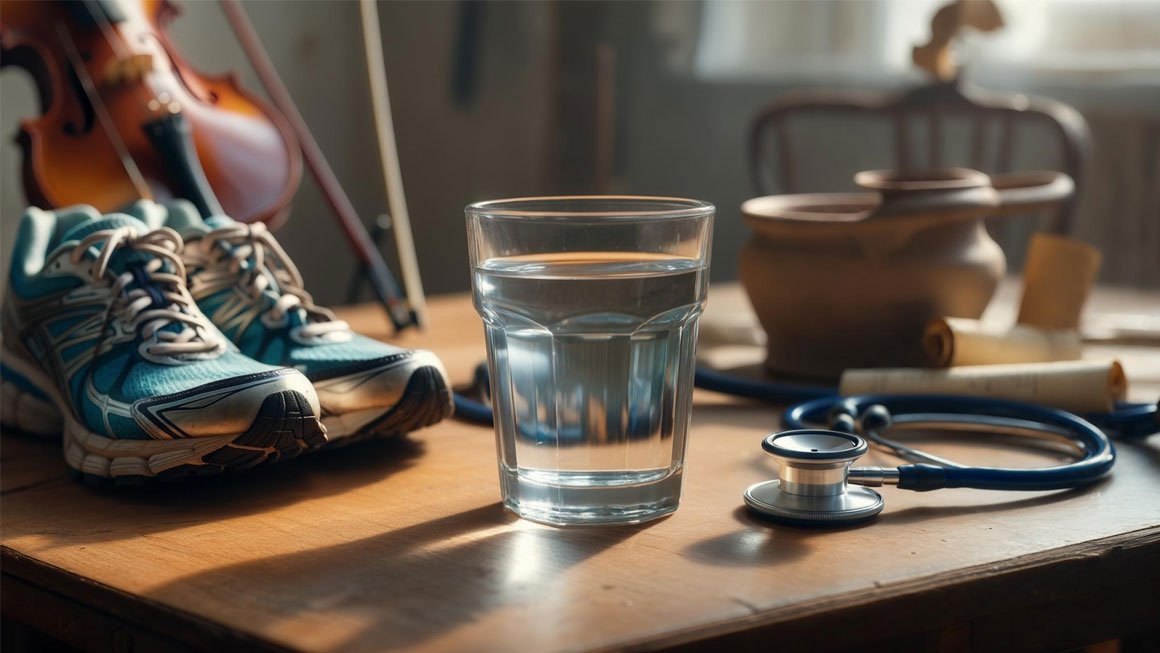
He didn’t think much of it at first. Just a dry mouth on a Wednesday afternoon and a slight ache behind the eyes. Deadlines had piled up, and the coffee machine was still humming in the background. But by early evening, his thoughts came slower, his focus blurred. And it struck him—not stress, not hunger. Just thirst. It was such a small thing. And yet, it wasn’t.
What the Body Remembers
The human body, for all its complexity, remembers water in ways the mind often forgets. A mother in Lisbon used to say that before reaching for pills or remedies, one should first drink a glass of water. Her children rolled their eyes, of course. But years later, one of them, now a nurse on night shift, found herself echoing those same words to a dizzy patient slumped in the corridor. “Start with water,” she said. “Let’s see.”
Water doesn’t boast. It doesn’t buzz or jolt like caffeine. It enters quietly, slipping into the bloodstream, softening tension in joints, fueling the brain, keeping muscles honest. A marathoner in his early forties, running the rainy streets of Glasgow, once admitted that his biggest breakthrough wasn’t a new pair of shoes or a better training plan—it was learning to hydrate before he was thirsty. “It’s boring advice,” he laughed, “but it made me faster than anything else.”
And it’s not just athletes. A retired librarian from Kraków found her headaches vanished once she stopped relying on thirst alone. “I thought I needed stronger glasses,” she said. “Turned out I just needed to carry a bottle in my bag.”
The Art of Remembering to Drink
There’s something oddly fragile about the act of drinking water. In cold weather, the body stops asking for it. In meetings, in commutes, in classrooms, hydration is pushed down the list. A young violinist in Tokyo once fainted during rehearsal. It was summer, and she’d been practicing for hours in a windowless room. When she woke up, her teacher was crouched beside her, holding out a paper cup. “You need to treat your body like the instrument,” he’d said. She never forgot it.
Even in places where water is abundant, drinking it regularly doesn’t always come naturally. Many reach for sparkling soda or sugary teas, not because they’re better—but because water is invisible, flavorless, easy to ignore. One architect in Montreal set alarms to remind himself to drink. “Felt silly at first,” he admitted. “Now it’s like brushing my teeth. Quiet but essential.”
And in countries where access to clean water isn’t guaranteed, the act takes on a different weight. A teacher in Nairobi once shared how she taught her students to cherish every sip, not just as hydration, but as gratitude. “They don’t forget,” she said. “Not like we do.”
More Than a Habit
Drinking water, regularly and without waiting for discomfort, can feel like a small act of care. For some, it’s the first thing done in the morning—not out of discipline, but as a way of arriving in the day. A ceramicist in Athens keeps a glass beside her wheel, sipping between shaping and glazing. “It keeps me grounded,” she says, “like a little reset every hour.”
Health isn’t always found in grand routines. Sometimes it lives in habits so gentle they barely register. Water, taken quietly, changes things. Not overnight. Not dramatically. But steadily. A clear mind. Steadier hands. Fewer sighs at the end of long afternoons.
And perhaps that’s its secret—the way water works, not as a miracle, but as a reminder. To pause. To tend. To listen.
Leave a Reply